

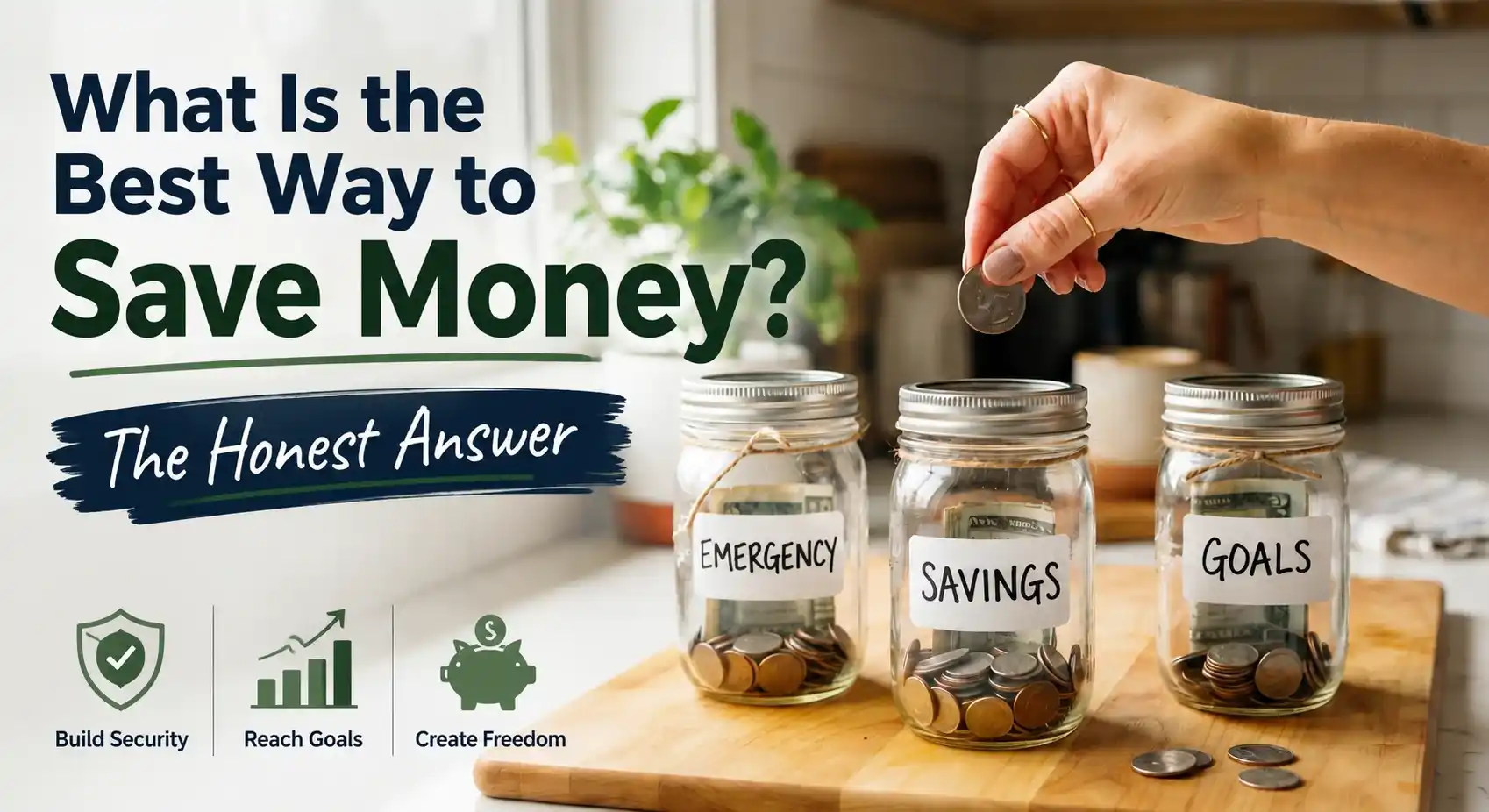





If you have ever typed “how to save money” into a search bar at eleven at night, you already know the feeling. Your pay cheque arrives, bills disappear, and somehow there is nothing left over at the end of the month. You are not doing anything wrong. Saving money is a skill, and like any skill, it gets easier once you have a system instead of just good intentions.
This guide walks through the exact steps that actually move the needle and get you saving money: a budget you can stick to, automatic savings, smart cuts to everyday spending, and a few habits that quietly add up over a year. None of this requires a finance degree. In order to save money, you just require a plan.
Why Saving Money Feels So Hard
Most people do not struggle to save money because they spend too much on one big thing. They struggle because of dozens of small leaks: a forgotten subscription here, a food delivery order there, a coffee run that becomes a daily habit. Individually these feel harmless. Added up over a month, they can easily eat one hundred dollars or more that could have gone into savings instead.
The good news is that once you can see where your money is going, it becomes much easier to redirect it. That is exactly what the next few sections will help you do.

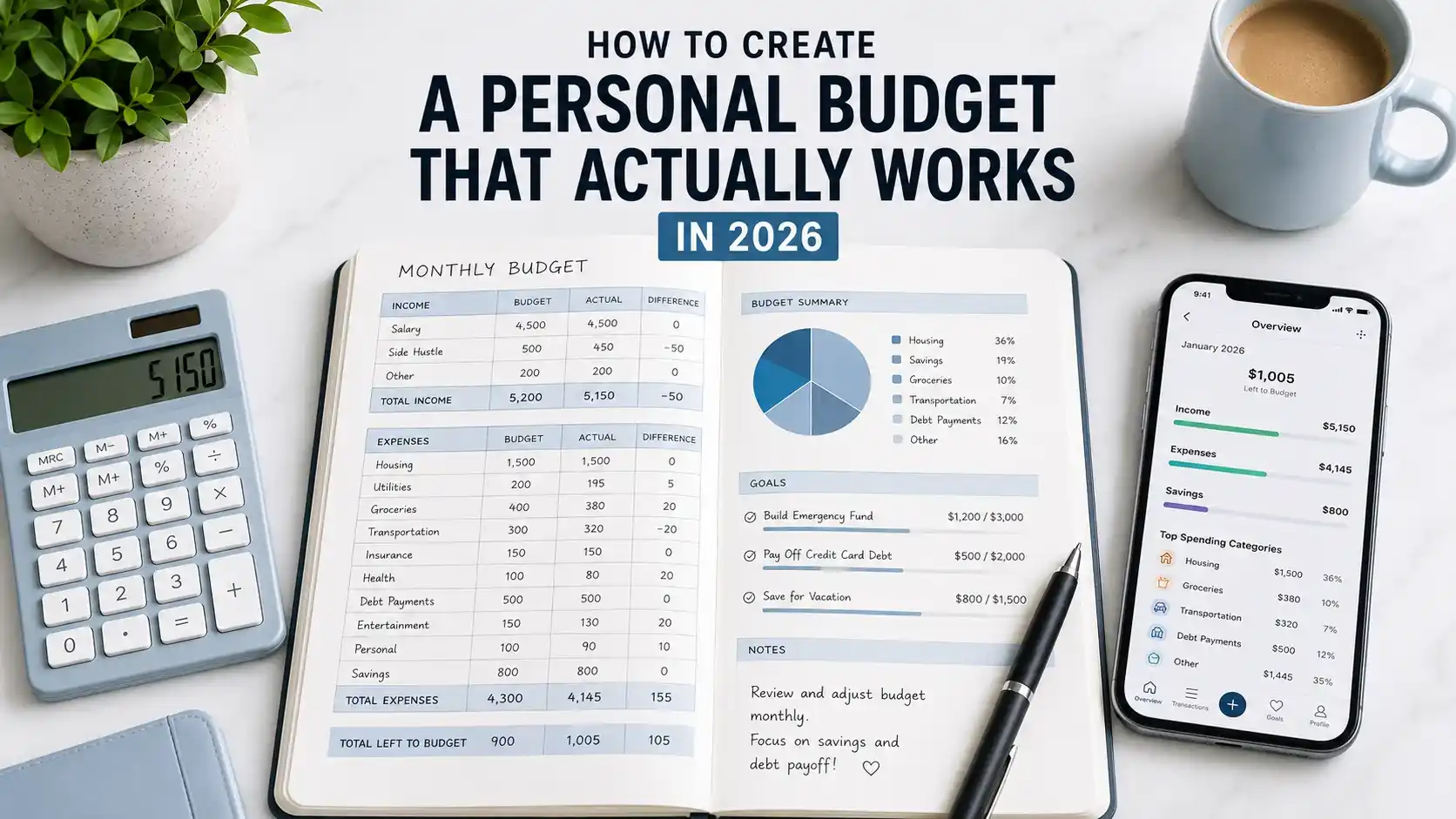
Save Money With a Budget You Can Actually Stick To
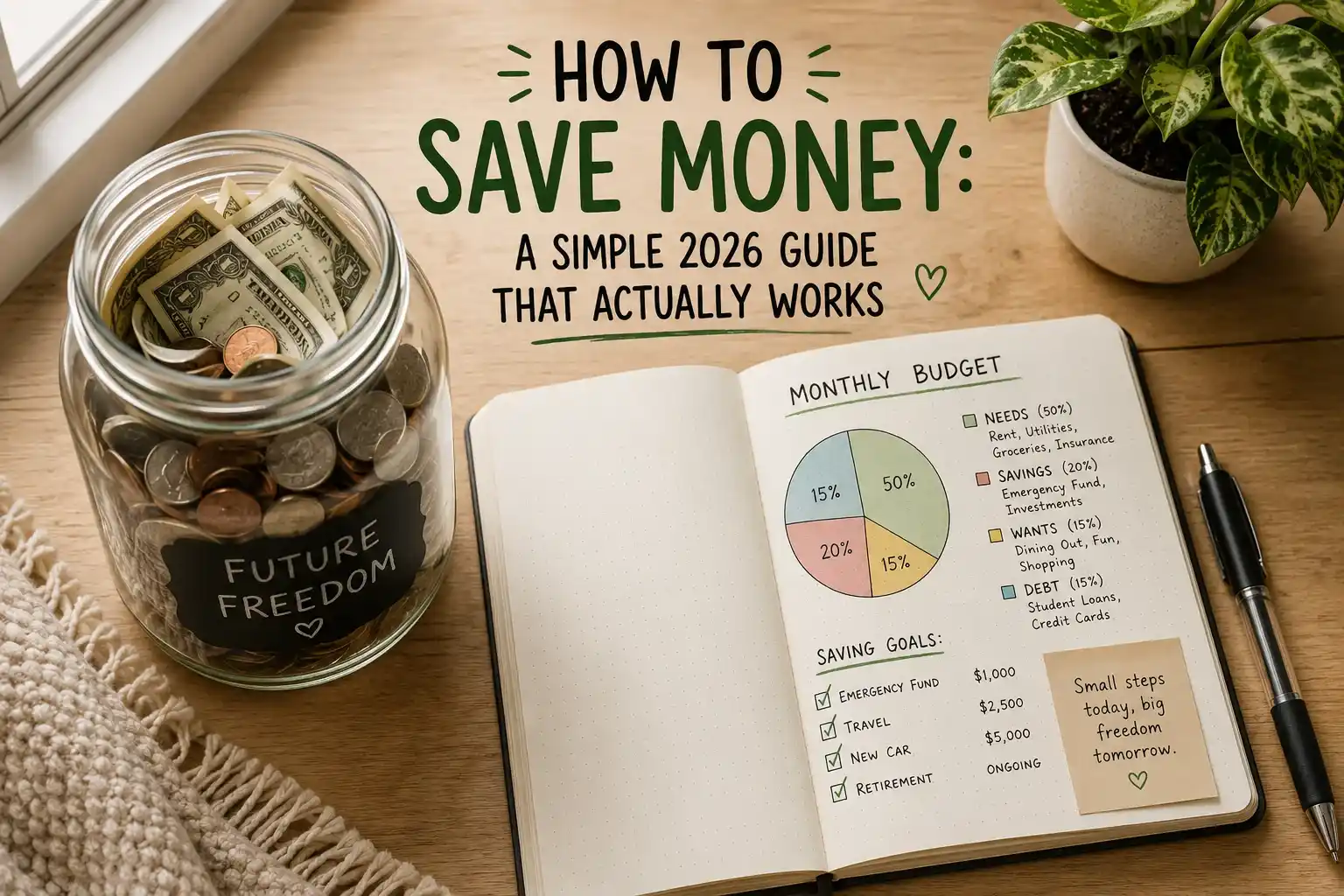
A budget is not a punishment. It is simply a plan for your money so that every dollar has a job before it disappears. One of the easiest frameworks to follow is the 50/30/20 rule. Put roughly 50 percent of your after tax income toward needs like rent, groceries, and utilities. Put about 30 percent toward wants like eating out or streaming services. Send the remaining 20 percent to savings or paying down debt.
You do not need to follow this rule exactly. If your rent is high, your split might look more like 60/20/20. The point is having a rough plan so you know how much room you actually have, instead of guessing and hoping it works out.
Automate Your Savings So You Do Not Have to Think About It
Willpower runs out. Automation does not. Set up an automatic transfer from checking to savings for the day after payday, even if it starts small, like twenty or thirty dollars per paycheck. Paying yourself first means the money is already gone before you have a chance to spend it.
Many people find that once the transfer becomes automatic, they stop noticing it after a month or two. The account balance just quietly grows in the background while everyday spending adjusts around it.
Cut the Expenses That Quietly Drain Your Budget
Subscriptions, food delivery, and impulse purchases are the three biggest silent budget killers. Pull up your last two bank statements and highlight every recurring charge. Cancel anything you have not used in the past month. Rotate streaming services instead of paying for all of them at once.
Cooking at home instead of ordering delivery is one of the fastest ways to save real money, often hundreds of dollars a month for a household that eats out frequently. You do not need to cut takeout completely. Just turn it into an intentional choice instead of a default habit.
- Cancel unused subscriptions and rotate the ones you keep
- Cook at home more often and save restaurants for special occasions
- Use a 24-hour rule before non-essential purchases over fifty dollars
- Switch to generic brands for groceries and household basics
- Set a weekly spending cap for convenience purchases like coffee and delivery
Build an Emergency Fund First to save money
Before chasing bigger financial goals, aim to build a small emergency fund, even just five hundred to one thousand dollars. This buffer keeps a flat tyre or a surprise medical bill from turning into credit card debt. Once that first cushion is in place, work toward three to six months of essential expenses over time.
Use a high-yield savings account.
Where you keep your savings matters almost as much as how much you save. A regular checking account pays close to nothing in interest. A high-yield savings account can pay several times the national average, which means your money grows faster just by sitting there. It takes about ten minutes to open one online, and your emergency fund and short-term savings goals belong there instead of a low-interest account.
Small Habits That Add Up Over Time
To save money is rarely about one dramatic sacrifice. It is usually a handful of small habits repeated consistently. A weekly ten-minute check-in on your spending, a rule to sleep on big purchases, and a habit of negotiating one bill a year, such as internet or insurance, can each save you real money without making life feel smaller.
Selling unused items around the house and sending that cash straight to savings is another simple trick that gives extra money an immediate purpose instead of letting it disappear into everyday spending.
Common Mistakes That Sabotage Your Savings
The most common mistake is setting a savings goal so aggressive that it feels impossible, then giving up entirely after one bad month. A smaller, consistent amount that you actually stick to will always beat an ambitious plan you abandon after three weeks. Another common mistake is keeping savings in the same account you spend from, which makes it far too easy to dip into. Keep savings separate, ideally in an account that is slightly less convenient to access.
How Long Does It Take to See Results
Most people start noticing a real difference within thirty to sixty days of putting a system in place. The first month is usually about identifying the leaks: unused subscriptions, forgotten trial periods, and spending categories that quietly run higher than expected. By the second or third month, the automatic transfer and the smaller daily habits start to feel normal rather than like a sacrifice, and that is usually when the savings account balance starts climbing in a way you can actually see.
It helps to check your progress once a month rather than every single day. Daily balance checking tends to create anxiety around small, normal fluctuations, while a monthly review gives you a clearer picture of the overall trend. To save money, you need to plan smartly.
The Bottom Line
Learning how to save money is less about finding one perfect trick and more about stacking a few simple systems: a workable budget, automatic transfers, a few smart cuts, and a safe place to keep the money once it is saved. Start with just one of these steps this week. The rest tend to follow naturally once the first habit sticks.
For more ways to strengthen your finances, check out our guides on budgeting frameworks and building credit on Fiscible.