








Let’s be honest for a second. Shopping for life insurance is something most people dread. It sits on the to-do list right next to “schedule a root canal” or “organize the basement.” It can feel tedious, overwhelming, and, quite frankly, a bit morbid. You are essentially planning for a future where you aren’t there, and that isn’t exactly a fun Friday night conversation.
Finding a trustworthy source for this information is also surprisingly difficult. You might hear one expert shout that term insurance is the only way to go, while another insists that permanent coverage is the bedrock of a solid financial plan. It is enough to make anyone want to close the browser and walk away.
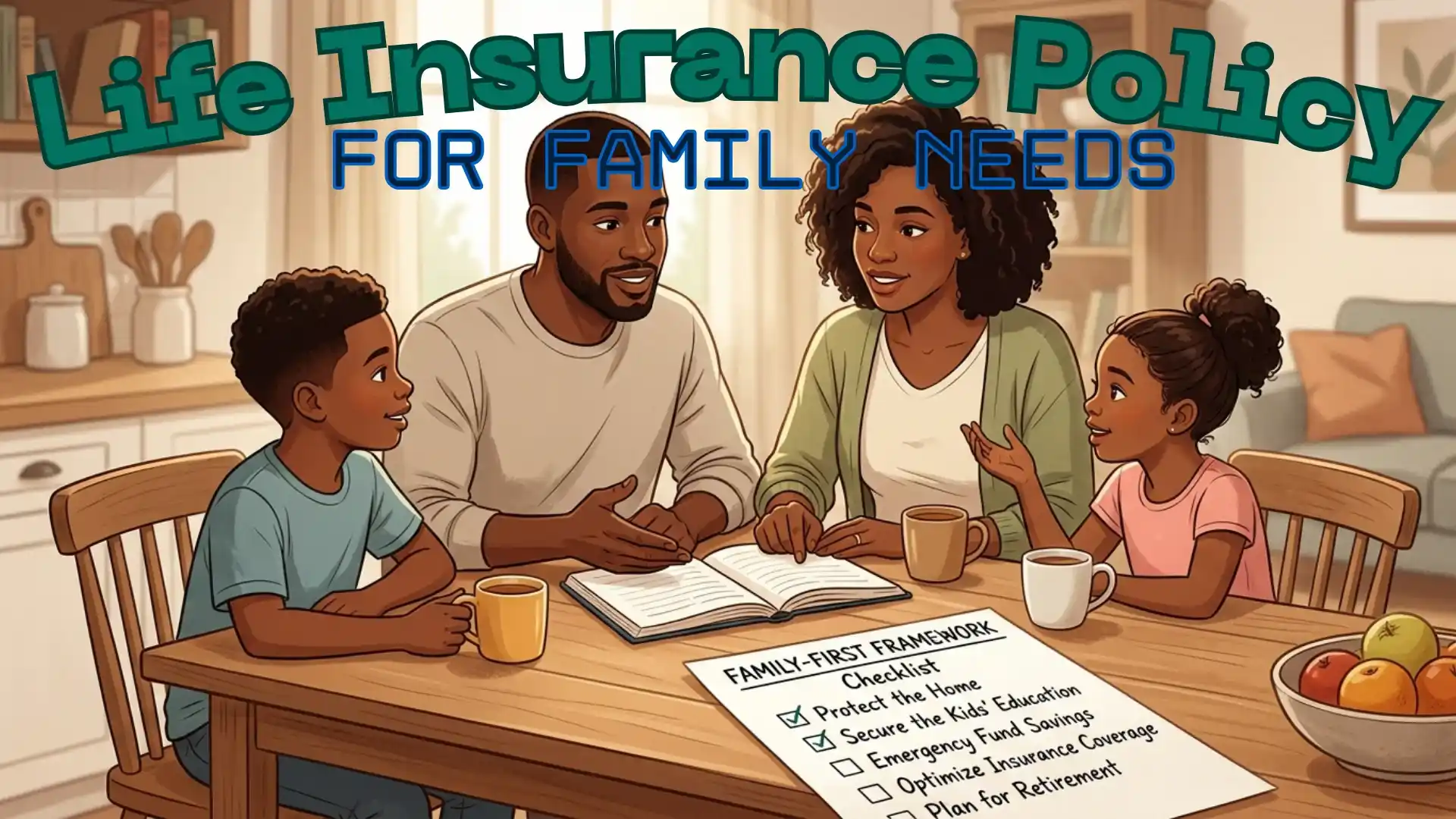
At Fiscible, our goal is to break down these complex, heavy topics into clear, easy to understand content that anyone can follow. We believe you shouldn’t need a finance degree to protect your family. This guide introduces our “Family-First Framework” to help you navigate your options and make a decision you can feel confident about.
Why choosing a life insurance policy feels overwhelming
The main reason people get stuck is the sheer amount of conflicting advice. Take the famous debate between personal finance icons Dave Ramsey and Ed Slott. Dave Ramsey fiercely defends the idea that life insurance should never be permanent, arguing that term insurance is the best type for everyone. On the other side, tax expert Ed Slott believes permanent life insurance should be the foundation of a serious financial strategy due to its tax advantages.
So, who is right? The truth is that “right” depends entirely on your specific situation, your budget, and your long term goals. Life insurance isn’t a one size fits all product, and trying to force it into one is where the stress starts.
If you are already following our proven personal finance management guide, you know that every financial decision should serve your broader plan. Choosing a policy is just another step in that journey. Whether you are dealing with insurance debt and using zero-based budgeting to clear it, or you are starting with a clean slate, the process remains the same. You need to understand what you are buying before you sign on the dotted line.
Term vs. permanent: How to choose a life insurance policy based on duration
Every life insurance policy you encounter will fall into one of two main categories: term or permanent (cash value). Think of term insurance like renting a home and permanent insurance like buying one.
Term life insurance: Pure protection
Term life insurance is the most straightforward option. You pick a coverage amount and a duration (the “term”), such as 10, 20, or 30 years. If you die during that term, your beneficiaries get the payout. If you outlive the term, the policy simply ends.
It is designed to provide lower cost coverage for a specific period when your financial needs are at their highest. This is why term life insurance is often the best fit for young families. You might have a mortgage, young children, and significant debt that you want covered for the next 20 years. Once the house is paid off and the kids are through college, the need for that massive payout usually decreases.
Permanent life insurance: Lifetime assets
Permanent insurance (which includes whole life, universal life, and variable life) lasts for your entire life as long as you keep paying the premiums. These policies include a cash value component that grows over time. You can actually borrow against this cash value or even withdraw it while you are still alive.
While the “living benefits” are attractive, they come at a price. Premiums for permanent policies are significantly higher than term policies because the insurer knows they will eventually have to pay out a death benefit. If you are looking for specific provider details, you can check our Ambetter Insurance review for more context on how different companies handle their plans.
Comparing the costs
| Age | 20-Year Term (Male) | 20-Year Term (Female) | Whole Life (Male) | Whole Life (Female) |
|---|---|---|---|---|
| 30 | $221/yr | $187/yr | $4,311/yr | $3,959/yr |
| 40 | $334/yr | $282/yr | $6,387/yr | $5,860/yr |
| 50 | $819/yr | $642/yr | $10,069/yr | $9,037/yr |
As you can see, the jump from term to whole life is massive. For most families, the question is whether that extra money is better spent on permanent insurance or invested elsewhere in a comprehensive guide for beginners.
How to choose a life insurance policy by calculating your coverage needs
Once you decide on the type of policy, the next hurdle is the amount. How do you actually put a number on your family’s future needs? The most reliable way to do this is the DIME method, which stands for Debt, Income, Mortgage, and Education.
Let’s break it down:
- Debt: Start by adding up all your immediate obligations. This includes funeral and burial costs (which can range from $2,000 to $15,000), student loans, and any consumer debt like credit cards.
- Income: This is usually the largest part of the calculation. How many years would your family need to replace your salary to maintain their lifestyle? Multiplying your annual income by 10 or 15 is a common rule of thumb.
- Mortgage: Calculate the remaining balance on your home. Providing enough to pay this off entirely gives your family the security of a roof over their heads without the monthly payment.
- Education: If you have children, how much will it cost to send them to college? NerdWallet suggests estimating $100,000 to $250,000 per child.
One interesting thing to keep in mind is the concept of “premium bands.” Many insurance buyers don’t realize that buying more coverage can sometimes cost less per unit. For example, a $500,000 policy might have a lower rate per $1,000 than a $250,000 policy. Always ask your agent if you are close to a band that could save you money.

Step-by-step: How to choose a life insurance policy for your family
Knowing the theory is one thing, but taking action is another. Here is our step by step framework for navigating the process:
Step 1: Define your protection window
Before you look at quotes, look at your timeline. How many years will it take for your children to be financially independent? When will the mortgage be paid off? This helps you decide if a 10, 20, or 30 year term is most appropriate. Guardian Life notes that most people choose a term that covers them until the kids are grown and the house is clear.
Step 2: Set a “safety-first” budget
Your life insurance premiums should be treated as a non-negotiable expense. If you fall into financial trouble, insurance is often one of the first things people cut, which is a dangerous move. Stolly Insurance Group points out that keeping your policy affordable from the start helps you avoid a lapse in coverage when you might need it most.
Step 3: Audit your employer benefits
Reputable life insurance companies should provide transparent quotes. Don’t just settle for the first one you see. Compare at least three different providers to see how they account for your medical history and lifestyle habits. Some companies are more lenient with certain health conditions than others.
Step 5: Schedule an annual review
Life changes quickly. A new baby, a bigger house, or a major promotion can all change your coverage needs. The American College recommends reviewing your policy once a year to ensure it still aligns with your family’s reality.
Crucial riders and features when you choose a life insurance policy
Beyond the basic death benefit, most policies offer “riders” which are optional add-ons that customize your coverage. Some of these are surprisingly valuable for families.
- Convertibility: This is a must-have for term policies. It allows you to convert your term policy to a permanent one later in life without taking a new medical exam. This is vital if your health declines during the term.
- Waiver of Premium: This rider waives your premiums if you become totally disabled. Considering a 20-year-old has a one in four chance of becoming disabled before they retire, this is often worth the extra cost.
- Living Benefits: Some policies allow you to accelerate your death benefit if you are diagnosed with a terminal or chronic illness. This cash can help cover medical bills or long term care while you are still alive.
- Wellness Rewards: Programs like John Hancock Vitality actually reward you for healthy choices. By tracking your steps or buying healthy food, you can earn discounts on your premiums and even rewards like an Apple Watch.
If you are looking to maximize your financial stability, it is also worth exploring different types of stock to build a diverse portfolio alongside your insurance.
Start building your family’s financial safety net today
The “best” life insurance policy isn’t the most expensive one or the one with the most bells and whistles. It is the policy that is active and funded on the day your family needs it. Whether you choose a simple term policy to cover your working years or a permanent plan to build a legacy, the important thing is to take the first step.
Calculate your DIME number today. Sit down with your spouse, look at your debts, your income needs, and your kids’ futures. Having that number in mind makes the entire process of talking to an agent much less overwhelming. You aren’t just buying insurance; you are buying peace of mind.
For more resources on protecting your assets, visit our Insurance Guides category or learn more about how to invest in stocks to continue growing your wealth. We are here to help you manage your finances confidently and responsibly.