

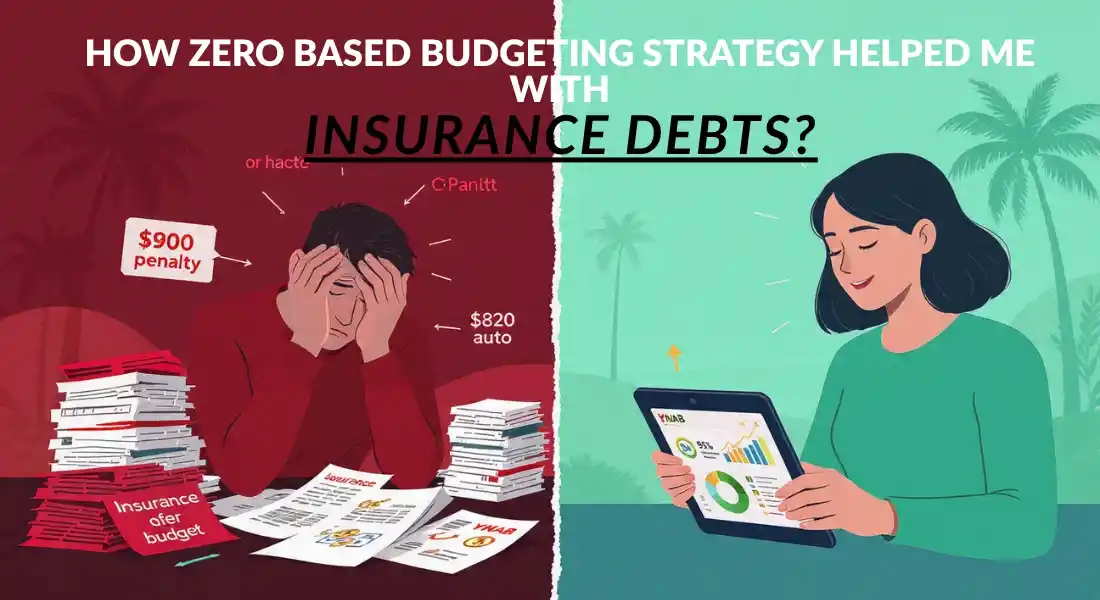
A zero based budgeting strategy which helped me escape my Health, Auto, and Life Insurance debts.
Managing expenses has never been my cup of tea. I have struggled a lot in this department ever since I came into existence specifically after 2022 things got rough, and ever since state law mandated health insurance came into play, things became tough.
As per this law, you were required to file a penalty which approximately cost $900 in 2023-2024 per adult and was required to be filed when filing tax return and in 2025 it was increased to $950. Adding fuel to the fire to this already mismanaged expense was automobile insurance. As I am writing this article in 2026, it roughly costs around $820 per year if you are to cover minimum liability. And even more full coverage.
So, managing this was a mammoth task along with some other insurances like Life insurance which was to ensure that my heirs receive something after my death.
I was under debt due to the sheer amount spent on insurance, until I was introduced to Zero Based Budgeting strategy (ZBB) by my CFA friend in California who was also my financial advisor for a very long time. As I mentioned in detail about my financial struggles in my previous article. He used to say to me that ” zero based budgeting strategy is a game changer if you know how to play along” and after years of practicing this strategy I found him right.
Insurance
In simple terms, Insurance is defined as a contract between an individual or an entity with the insurance company in which the individual or an entity pays the insurance company an amount known as insurance premium to provide monetary compensation against the future losses due to accidents, injuries or damages to property.
It can be personal insurance or business insurance. Personal insurance includes health insurance, life insurance, etc.
Business insurance may vary from company to company.
In the USA, state law may regulate the business to buy some specific insurance.
Zero-Based Budgeting Strategy
Here is a brief introduction to Zero-Based Budgeting.
Zero Based budgeting strategy is a replenished form of budgeting, varying from traditional budgeting practices. Contrary to the traditional budgeting practices, which entails the previous year’s budget as a base and then adjusts all the relevant adjustments for the next year including inflation etc., ZBB is far different. It demands every expense to be justified starting from a “zero base.” It means that instead of haphazardly spending each amount, it requires a proper justification of each amount to be incurred.
The term Was first introduced by Peter Phyrr in 1970 to help inculcate long term objectives by associating them to functional grounds Since then it has been in practice in various businesses.
Advantages
It has some great benefits.
Reduction in Costs:
As the funds are allocated based on needs and efficiency rather than past data, only those expenses are incurred which are a need of a person rather than just using past historical data.
Managing Expenses
Expenses are manageable because only those expenses are incurred, which are unavoidable and justified. This helps to reduce extravagance.
Long term Zero Based budgeting strategy
If a person wants to buy a house or a car, which requires a lot of investment. Zero based budgeting strategy can indirectly help to save for that project by cutting the unnecessary costs in a way that person can save the money for that long-term project.
The bottom line is that it offers a comprehensive plan to ensure financial planning by requiring a detailed justification for all the expenses done by a person. This allows the person to invest in strategic financial management to allow optimization of his income.
Insurance and Zero based Budgeting Strategy
Budgeting strategy for Insurance in the state of California can be a hard cookie to crack. It’s a multi-step model which requires analyzing, planning, and implementing strategies to ensure execution. I used YNAB financial app to take care of my zero based budgeting strategy for quite sometime which helped me in:
1) Assessing Lifestyle. The first and foremost step is to ensure that there is a sync between your current lifestyle and insurance.
In simpler words, make sure you need insurance or not.
For example, if a person is not a very ardent traveler, he doesn’t need travel insurance.
Insurance can be divided broadly in 3 categories to assess the urgency
I) Urgent: it includes insurances which are critical for safety as well as not following them could earn you a legal repercussion. E.g. health insurance,
ii) High Impact: all types of insurances which have a high impact on long term incomes and asset E.g. Business insurance
iii) Remote: insurance which seems like luxury e.g. pet insurance, travel insurance
Based on ZBB, urgent insurance should be done always as it could earn you some penalties or fines.
High Impact insurances should be done mostly as it is required
And remote insurance shouldn’t be done as it’s more of a Luxury other than occasion when there is a reasonable justification for it.
2) Reevaluating Premiums. As ZBB is a means to start from scratch, using Zero Based Budgeting strategy is the right time to identify whether the current insurance premiums are competitive as per your current wealth, or you need to find better quotations. The better the quotation, the minimum would be the cost
3) Continuous Monitoring. Unlike Traditional budgeting, ZBB is not a one-time process in which you set up the budget at the start of the period and compare the results at the end of the period.
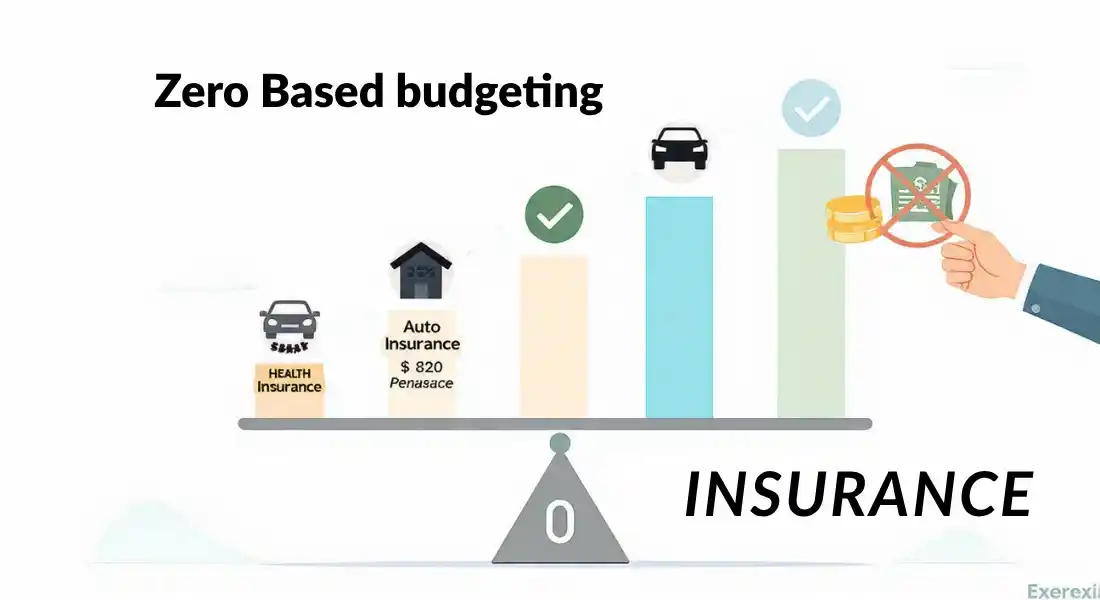
It is a continuous process which is monitored constantly.
i) Monthly verification: Bank statement should be checked at the end of each period to check whether the amount budgeted matches the amount deducted (as it is an automatic process)
ii) Re-allocation: Since a common citizen living in the US market knows that inflation is common. So, if the premium increases unexpectedly due to that, you should immediately reduce some other “premium” expenses to maintain a Zero balance for the next period
Comparison and Conclusion
So, all in all, ZBB has really helped me manage my expenses for the year. Here is a comparison of it.
Before using ZBB, I couldn’t manage my expenses. I had $4000 at the start of the month, and most of it was spent on insurance like health insurance, Life insurance and automobile insurance and to manage it I had to take a loan from the bank as I was spending irrationally and haphazardly without any budget.
After using ZBB, my finances have improved as I manage to spend only that amount which is reasonably required for me to spend. Before spending an amount, I ask myself: Is this necessary?
If yes, then I will spend it.
If not, then I refrain it.
It is a tedious process, but has really helped me to manage my income and expenses for the year.
Author’s Take:
This article is based on my personal experiences and research. To get professional financial advice, please consult an authorized financial advisor.






4 thoughts on “HOW ZERO BASED BUDGETING STRATEGY HELPED ME WITH INSURANCE DEBT?”