






Tired of running out of money before payday? Learn how to stop living paycheck to paycheck in 2026 with 9 realistic steps that build breathing room, reduce financial stress, and put you back in control of your money.
Payday hits. You feel a short wave of relief. Then the rent, the car payment, the utilities, and the groceries land in your account within 48 hours, and you are back to staring at a balance that barely gets you to the next check.
If that cycle sounds familiar, you are not imagining it. Research consistently shows that roughly 60% of American workers are living paycheck to paycheck, and that number includes people earning well above the median income. This is not a problem that only hits low earners. It hits people at nearly every income level.
Living paycheck to paycheck is exhausting. It is a constant background hum of financial anxiety that does not go away. You cannot plan ahead because there is nothing left to plan with. An unexpected $300 car repair becomes a genuine crisis. A medical bill sends you spiraling into credit card debt.
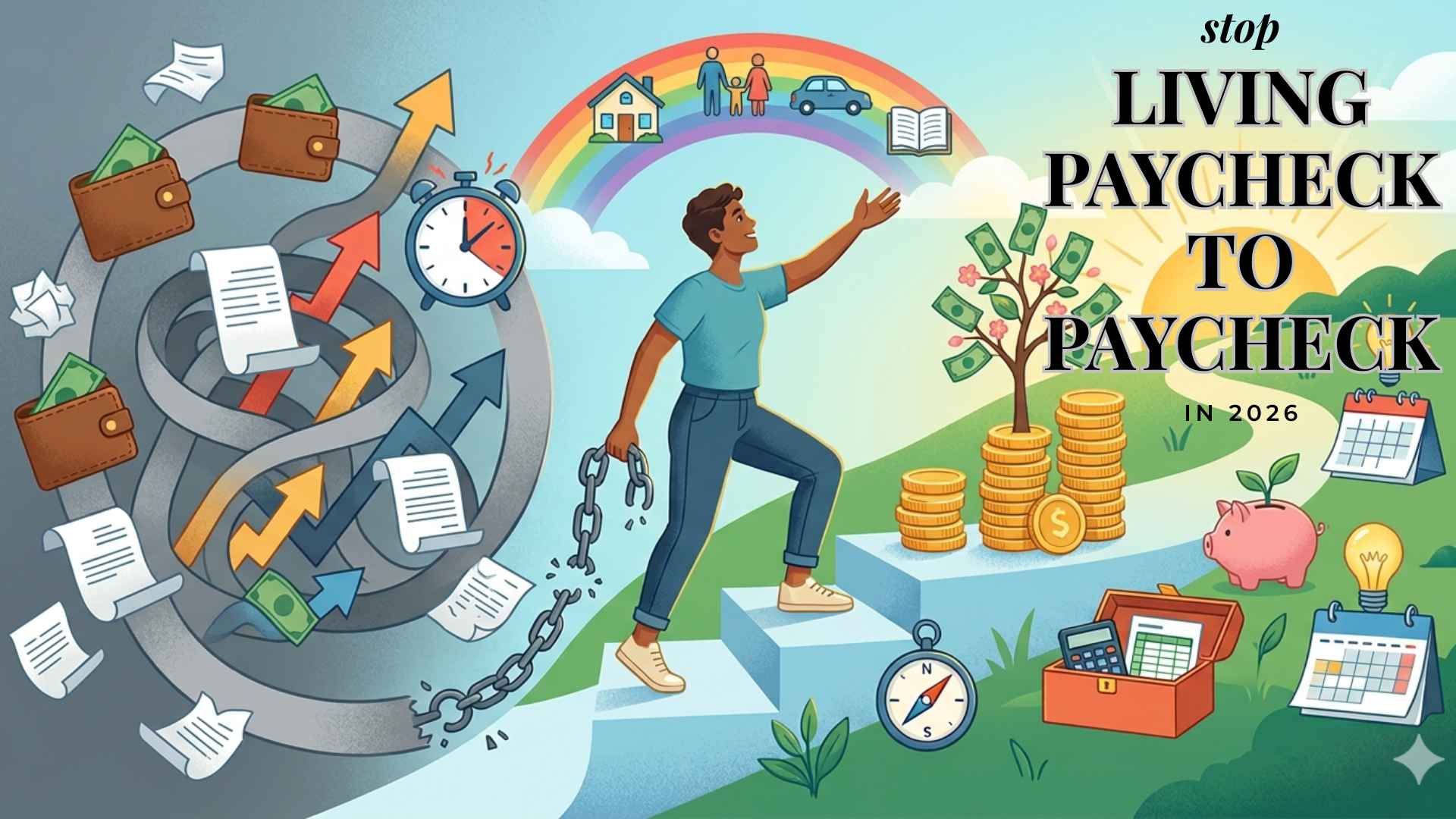
The good news is that the paycheck to paycheck cycle is breakable. Not all at once, and not without effort. But with the right moves, in the right order, you can stop living paycheck to paycheck and finally start building some breathing room.
Here is a realistic plan that actually works in 2026.
First, Understand Why You Are in This Cycle
Most people assume living paycheck to paycheck is a self-control problem. But that is rarely the whole story.
The paycheck to paycheck cycle is usually driven by a combination of things: fixed expenses that have crept up over time, irregular costs that the budget did not account for, debt payments that eat a large portion of income, and no margin to absorb the unexpected.
The average American household spends over $6,500 per month. Housing and transportation alone take up most of that before groceries or insurance even enter the picture. When your fixed costs are that high, small fluctuations in income or unexpected expenses can push anyone into a tight spot.
The goal here is not to shame yourself for being in this position. The goal is to understand how the cycle works so you can start interrupting it, one step at a time.
9 Practical Steps to Stop Living Paycheck to Paycheck
Step 1: Track Every Dollar You Spend for 30 Days
You cannot fix a leak you cannot see. Before making any major changes to your money, spend one full month tracking exactly where every dollar goes. Not an estimate. Actual numbers.
Use a free app like Mint or YNAB, a spreadsheet, or even a notebook. The goal is not judgment. It is awareness.
Most people who go through this exercise find at least two or three spending areas they had completely forgotten about. Subscriptions they stopped using. Delivery fees they did not add up. Small purchases that looked harmless individually but stacked up to hundreds per month.
You cannot stop living paycheck to paycheck without knowing where your money is actually going. This step is the foundation of everything else.
Step 2: Build a Bare-Bones Budget Around Your Real Income
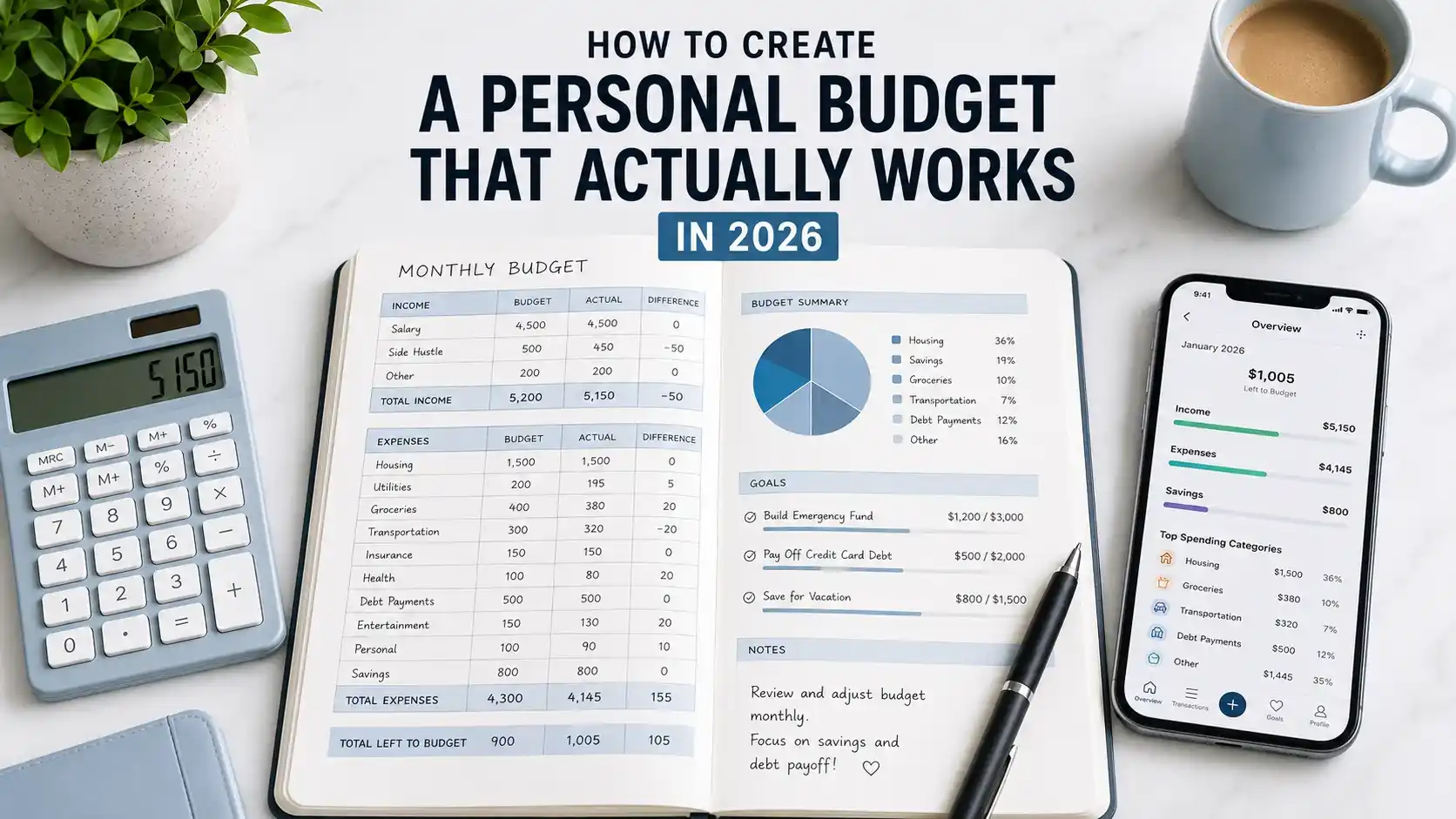
Once you know where your money goes, build a budget that starts with your actual take-home pay, not your gross income. Work from what actually lands in your bank account.
List your fixed non-negotiable expenses first. Rent, utilities, car payment, insurance, minimum debt payments. These are the bills you must cover no matter what.
Then look at what is left. That remaining amount is your discretionary budget. It covers groceries, transportation costs, personal care, and anything else. If your fixed expenses are eating nearly all of your paycheck, you are already identifying the core problem.
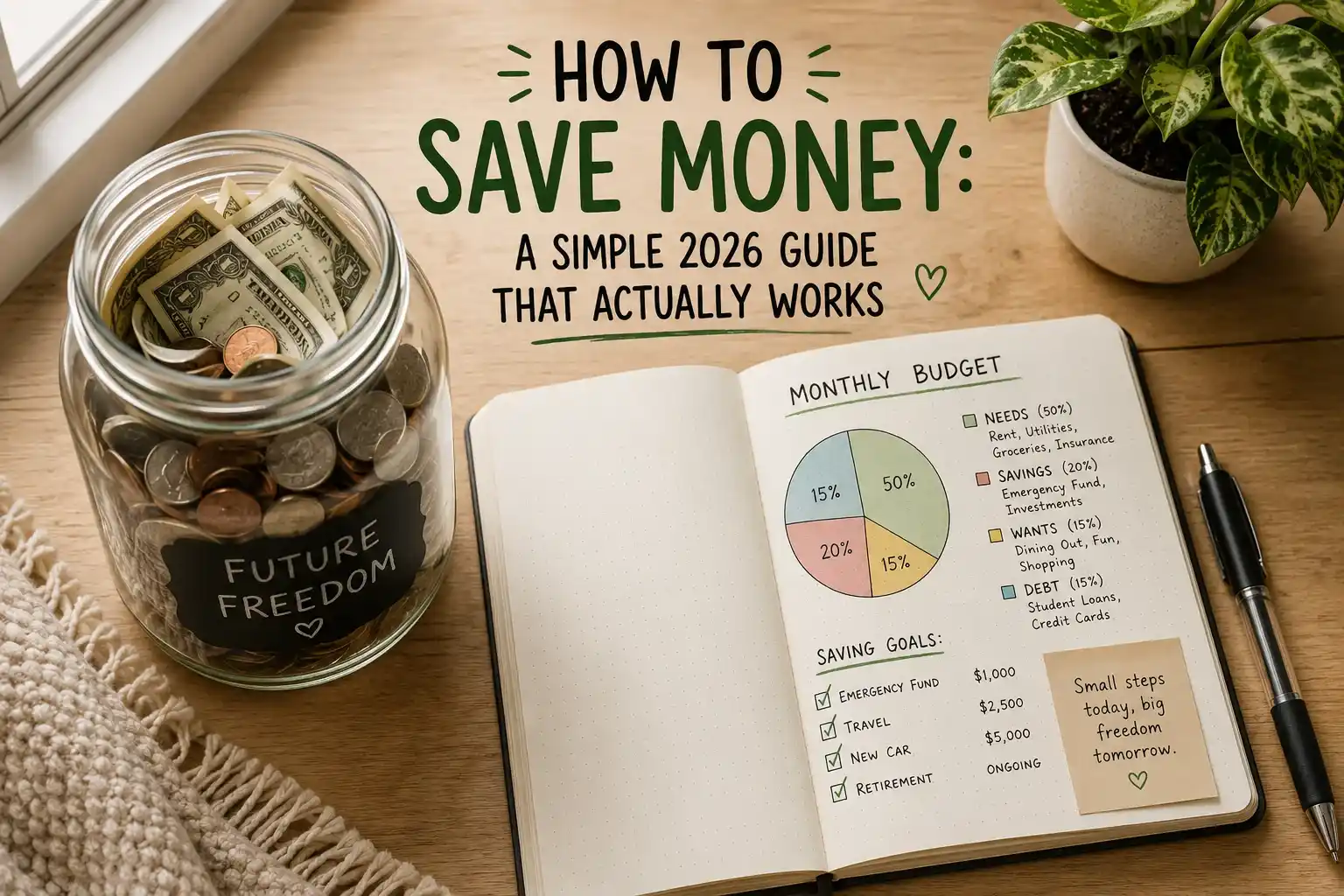
A realistic budget for someone trying to stop living paycheck to paycheck should have one goal above everything else: leave something behind at the end of the month. Even $50. Even $20. Something.
Step 3: Cut the Hidden Money Leaks
There are three categories where most households quietly hemorrhage money without realizing it.
Subscriptions: Go through your bank statements from the past 3 months and list every recurring charge. Streaming services, apps, gym memberships, meal kits, software subscriptions. Most people find 4 to 7 subscriptions they had forgotten about. Cancel anything you have not used in the past 30 days.
Food delivery apps: DoorDash, Uber Eats, and similar apps add 40% to 80% in fees, tips, and markups to every single order. If you order delivery three times a week at $35 per order, you are spending over $400 extra per month compared to cooking or picking up yourself. Reducing this one habit can free up hundreds.
Impulse purchases: The 24-hour rule is simple and effective. Before buying anything that is not a planned necessity, wait 24 hours. A significant percentage of impulse purchases will not survive one night of sleeping on it.
These cuts do not require huge lifestyle sacrifices. They require you to be intentional rather than automatic with your spending.
Step 4: Build a $500 to $1,000 Starter Emergency Fund First
This step surprises people who think they should tackle debt first. But here is the problem with skipping the emergency fund: if you put every spare dollar toward debt and then your car breaks down, you go right back into debt to cover it. You are running on a treadmill.
A small emergency fund, even $500, changes the dynamic. It means a car repair is an inconvenience, not a crisis. It means a medical bill does not automatically go on the credit card.
Set a goal of $500 first. Then $1,000. You do not need to build a full 3-month fund before tackling debt. You just need a small buffer between yourself and life’s inevitable surprises.
Automate a small transfer to a separate savings account every payday, even if it is $25. Out of sight, out of temptation.
Step 5: Attack Your Highest-Interest Debt
If credit card debt is part of your paycheck to paycheck problem, it will stay a problem until you deal with it directly. The average credit card APR in 2026 is around 21%. If you are carrying a $3,000 balance at that rate, you are paying over $600 per year just in interest. That is money doing nothing for you.
Use the debt avalanche method: list all your debts by interest rate, from highest to lowest. Put every extra dollar toward the highest-rate debt first while paying minimums on everything else. Once that balance is gone, roll that payment to the next debt on the list.
This method saves the most money over time and is one of the most powerful tools for breaking the paycheck to paycheck cycle permanently.
Step 6: Find One Way to Bring in Extra Income
Cutting expenses only gets you so far. Sometimes the paycheck to paycheck trap is partly a math problem. The income coming in is genuinely not enough to cover the costs of living, no matter how careful you are.
You do not need a second job. But adding even $200 to $400 per month from a side income can be the difference between treading water and actually making progress.
Ideas that work well in 2026:
- Freelancing a skill you already have (writing, graphic design, bookkeeping, social media management)
- Selling items you no longer use
- Offering local services like pet sitting, lawn care, or cleaning
- Picking up occasional shifts in gig economy apps like Instacart or TaskRabbit
The income does not need to be glamorous. It just needs to be real and consistent enough to move the needle.
Step 7: Automate Your Savings So You Do Not See It
One of the biggest reasons people fail to save when living paycheck to paycheck is because they try to save whatever is left at the end of the month. There is usually nothing left.
Flip the order. Set up an automatic transfer to savings on the same day your paycheck arrives. Even $20 or $30. Treat it the same way you treat rent. It is not optional, it is not negotiable, and it goes out before you have a chance to spend it.
This is called paying yourself first, and it is one of the simplest behavioral shifts you can make to stop living paycheck to paycheck for good.
Step 8: Use Bonus Paychecks Strategically
If you are paid biweekly, you receive 26 paychecks per year. Since most monthly bills are budgeted around two paychecks per month, two months out of the year you will receive a third paycheck you did not build your budget around.
Many people treat this extra check as fun money. If you want to stop living paycheck to paycheck, send it straight to your emergency fund or your highest-interest debt. A single extra paycheck, handled this way twice per year, can add $1,500 to $3,000 to your financial cushion without changing your daily budget at all.
Step 9: Revisit Your Biggest Fixed Expenses
Cutting lattes will not save you from the paycheck to paycheck trap. But renegotiating your biggest fixed bills might.
Call your insurance company and ask about available discounts. Shop around for better car insurance rates. Refinance a high-interest personal loan if your credit score has improved. Look at whether your cell phone plan still makes sense. Many people are paying for coverage or data they do not use.
These calls take 20 to 30 minutes each and can save you $100 to $300 per month. That is real money that goes toward building financial stability rather than disappearing without notice.

What It Looks Like to Actually Break the Cycle
Breaking the paycheck to paycheck cycle does not feel dramatic at first. It feels like having $80 left in your account two days before payday instead of zero. Then $200. Then you start the next month without stress because there is already a small cushion waiting.
That cushion is what changes everything. Once you have a buffer, financial stress drops. You stop making expensive reactive decisions. You start thinking weeks ahead instead of days ahead.
It does not happen overnight. But for most people who commit to the steps above, the cycle starts to break within 3 to 6 months of consistent changes.
The Honest Truth About Living Paycheck to Paycheck in 2026
The cost of living is genuinely high right now. That is real, and no budget tip is going to change that overnight. What these steps do is give you more control over the money you do have, help you find more of it, and make sure it is working harder for you.
The people who successfully stop living paycheck to paycheck are not earning dramatically more than they were. They got more intentional. They tracked, they cut, they automated, and they stayed consistent.
You can do the same thing. Start with Step 1 this week. One month of real tracking will show you exactly where your money is going, and that is the only place where the real change begins.
Quick Recap: 9 Steps to Stop Living Paycheck to Paycheck
- Track every dollar you spend for 30 days
- Build a budget based on real take-home pay
- Cut hidden money leaks (subscriptions, delivery apps, impulse buys)
- Build a $500 to $1,000 starter emergency fund
- Attack high-interest debt using the debt avalanche method
- Find one consistent source of extra income
- Automate savings before you spend anything
- Use bonus paychecks for savings or debt payoff only
- Renegotiate your biggest fixed bills every year
These steps will not solve everything at once. But applied consistently, they will move you out of the paycheck to paycheck cycle and toward the financial breathing room you actually deserve.
Want to know exactly how much you take home after taxes? Use our free Take-Home Pay Calculator at Fiscible.