








Urgent care cost with insurance depends on a handful of things specific to your plan.
Imagine you wake up on a Sunday morning with a sore throat that won’t quit, or maybe your kid twisted their ankle at the park. Your regular doctor’s office is closed. The emergency room feels like overkill. So you start Googling urgent care centers near you. But then a different question pops into your head: how much is this actually going to cost me?
If you have insurance, the answer is not as simple as you might hope and understanding those details before you walk through the door can save you from a surprise bill later.
This guide will tell you everything.
What Is Urgent Care, and Why Does It Matter for Costs?
Urgent care centers sit right in the middle of your primary care doctor and the emergency room. They handle things that can’t wait for a scheduled appointment but aren’t life-threatening enough to need an ER. Think ear infections, minor cuts, UTIs, sprains, flu symptoms, and similar issues.
The reason this category matters so much when we talk about costs is that insurance companies treat urgent care differently than they treat a regular doctor visit or an ER trip. Knowing where your urgent care visit falls in your plan’s structure tells you a lot about what you will pay.
Urgent Care Cost With Insurance: The Numbers
Here is what most people actually want to know: what will come out of your pocket?
The honest answer is that it varies. But based on current data, here is a reasonable picture:
If you have met your deductible for the year:
- Most plans charge a flat copay of $20 to $75 for an in-network urgent care visit.
- If your plan uses coinsurance instead of a copay, you will typically owe 15% to 30% of the total bill.
If you have NOT met your deductible yet:
- You could pay the full negotiated rate between your insurer and the facility.
- This typically runs anywhere from $160 to $330 for a standard visit.
If you go out of network:
- Costs jump significantly. You might pay two to three times more, or the visit may not be covered at all depending on your plan type.
For comparison, walking into an urgent care center without any insurance costs an average of $280 in 2026, and that number goes higher once you add lab work or imaging. With insurance, even before meeting your deductible, you are usually in a better position because of the negotiated rates your insurer has locked in with in-network providers.
What Adds to Your Urgent Care Bill?
The visit itself is just the starting point. Several additional services can raise your urgent care cost with insurance, even when you have good coverage.
Lab Tests and Diagnostics If you need a flu test, strep test, urinalysis, or blood work, those are billed separately from the visit fee. Lab tests can add $50 to $300 to your total. Some of those costs fall under your coinsurance, meaning you still owe a percentage even after meeting your deductible.
X-Rays and Imaging Sprained ankle? Possible fracture? An X-ray is likely coming. A visit that requires imaging can cost $330 to $500 out of pocket, even with insurance, depending on your plan and whether you have met your deductible.
Stitches and Wound Care Minor procedures like wound cleaning, sutures, or splinting require additional time and supplies. These are typically billed as separate line items and will add to your final bill.
Medications Given On-Site If the provider gives you a breathing treatment, injection, or IV fluid during your visit, that may be billed separately. Any prescription you take home is handled through your pharmacy benefit, not the urgent care visit itself.
How Your Insurance Plan Type Affects Urgent Care Cost
The type of health insurance plan you have plays a major role in determining your urgent care cost with insurance. Here is a quick breakdown by plan type:
HMO (Health Maintenance Organization)
HMO plans usually require you to use in-network providers and may require a referral for specialist care. Most HMOs cover urgent care visits within their network at a flat copay. Going to an urgent care center outside the network usually means paying the full cost yourself, unless it is a true emergency.
PPO (Preferred Provider Organization)
PPO plans give you more flexibility. You can see in-network urgent care providers at a lower cost, but you also have the option to go out of network at a higher rate. These plans tend to have more predictable urgent care copays.
HDHP (High Deductible Health Plan)
HDHPs are paired with Health Savings Accounts (HSAs). The catch is that your deductible is high, often $1,500 or more for an individual. Until you hit that deductible, you will pay the full negotiated rate for your urgent care visit. After you meet it, your coinsurance kicks in.
Medicaid
If you are on Medicaid, urgent care visits are covered in most states. Copays are very low, sometimes zero, depending on your state’s program.
Medicare
Medicare Part B covers urgent care as an outpatient service. In 2026, after meeting the $257 Part B deductible, you typically pay 20% of the Medicare-approved cost. If you have Medicare Advantage (Part C), your copay could be anywhere from $0 to $50 per visit, depending on your plan.
In-Network vs. Out-of-Network: The Single Biggest Factor
If there is one thing you take away from this article, let it be this: always choose an in-network urgent care center.
Going in-network means your insurance company has already negotiated lower rates with that facility. You pay less, and those payments count toward your deductible and out-of-pocket maximum.
Going out of network often means:
- Higher rates because no negotiated discount applies
- Your insurance may not count those costs toward your deductible
- Some plans cover zero out-of-network urgent care costs
Before you walk in, take 60 seconds to check your insurer’s website or app for in-network urgent care locations near you. Most have location finders built right in.
Tips to Lower Your Urgent Care Cost With Insurance
Even with insurance, there are smart ways to keep your urgent care cost down.
1. Confirm the facility is in-network before you go. Use your insurer’s online directory or call the number on your insurance card.
2. Ask for a cost estimate up front. Many urgent care centers will give you an estimate based on your insurance information before they start treatment.
3. Request itemized billing. If your bill seems higher than expected, ask for a line-by-line breakdown. Billing errors happen more often than people think.
4. Consider telehealth first. Many conditions that people go to urgent care for can actually be handled through a virtual visit at a much lower cost. If your plan offers telehealth, check whether your issue qualifies.
5. Use your HSA or FSA. If you have a Health Savings Account or Flexible Spending Account, you can use those pre-tax dollars to pay your urgent care bill, which effectively reduces the cost.
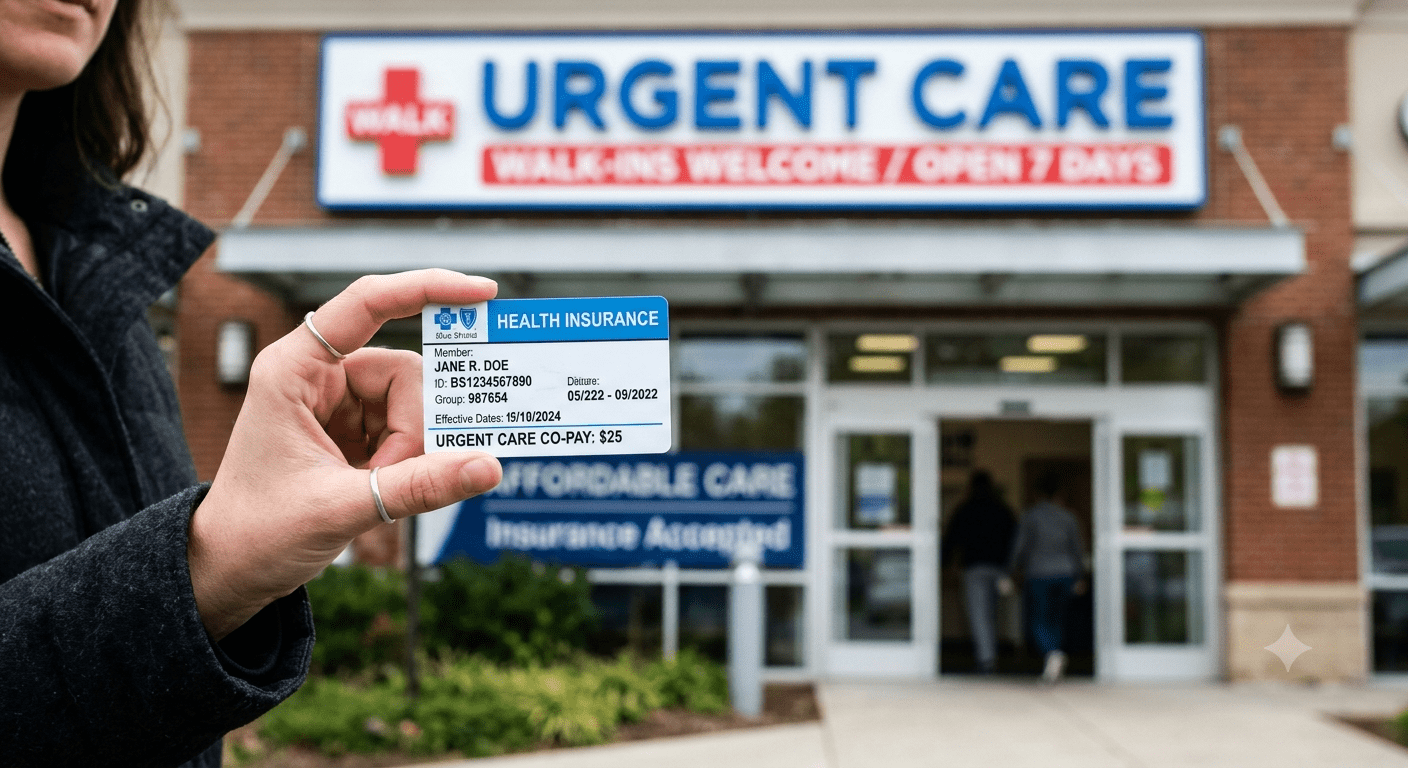
6. Check if your plan has a specific urgent care copay. Some insurance cards actually list the copay amount for different visit types right on the card itself. That number is your quick reference.

Urgent Care vs. Emergency Room: A Cost Comparison
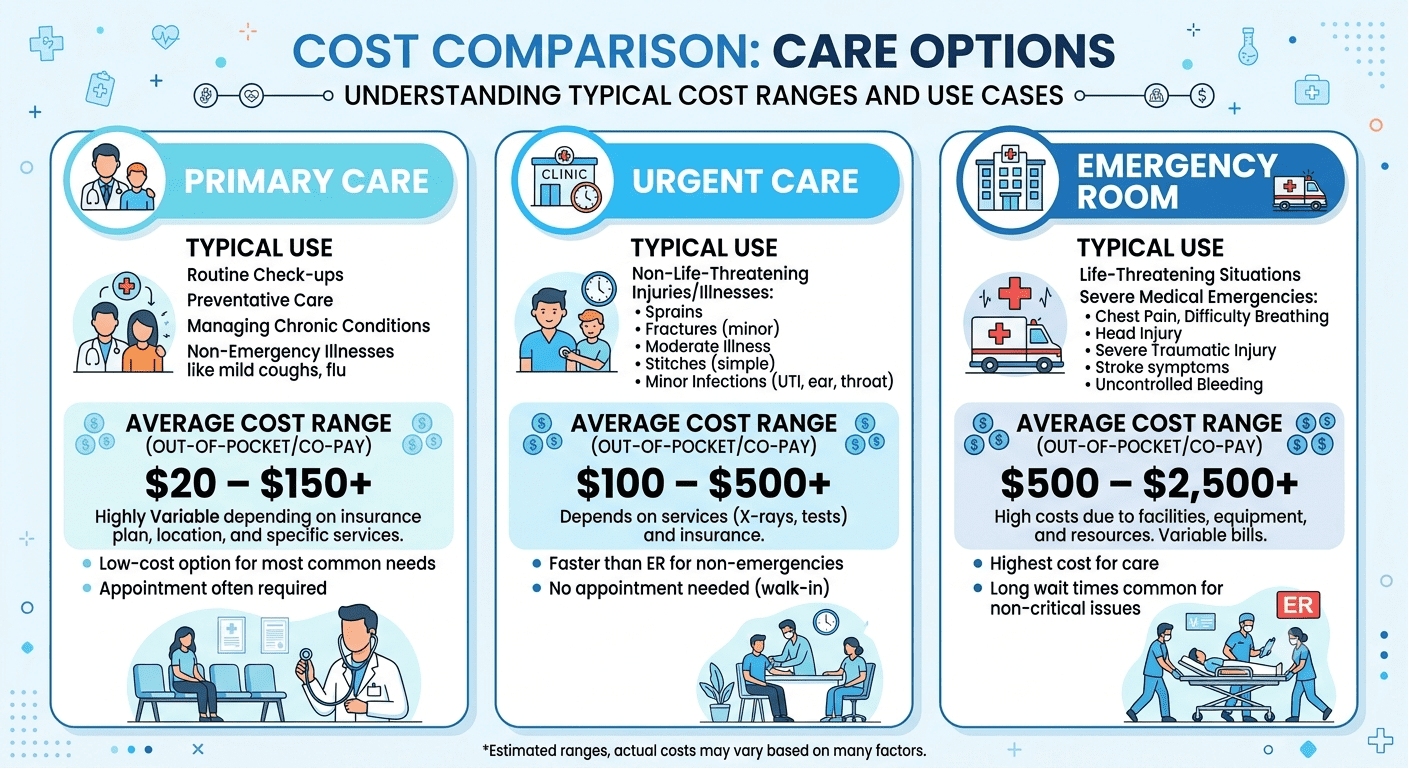
A lot of people end up in the ER when urgent care would have worked perfectly fine and cost a fraction of the price. For non-life-threatening conditions, an ER visit can easily run over $2,000, while the same treatment at an urgent care center would cost a small fraction of that even without insurance.
If you are not sure which one to choose, here is a simple rule: if it is not immediately life-threatening, start with urgent care. You can always be transferred to an ER if needed, and urgent care staff will tell you if your condition requires more intensive care.
The Bottom Line
Urgent care cost with insurance is generally manageable, especially when you stay in-network and understand your plan. Most insured patients pay a copay between $20 and $75, though that number climbs if you have not yet met your deductible or if you need additional services like lab tests or X-rays.
The best approach is to know your plan details before something goes wrong. Pull up your insurance card, look up your urgent care copay, and find in-network locations near you. A little preparation goes a long way toward avoiding sticker shock when you are already not feeling well.
For more guidance on navigating your health insurance costs, visit Fiscible.com.






One thought on “HOW MUCH DOES URGENT CARE COST WITH INSURANCE? A COMPLETE GUIDE FOR 2026”