




Want to know how to build credit from scratch in 2026? This beginner-friendly guide walks you through every step, from secured cards to credit builder loans, so you can go from zero to a strong credit score.
Introduction
If you have never had a credit card or a loan in your name, getting approved for one feels like a trap. Lenders want you to have credit history before they give you credit. But how do you get credit history if nobody gives you a chance in the first place?
That is the exact frustration millions of people face every year. Young adults just starting out, recent immigrants, and anyone who has avoided debt their whole life can all find themselves in this situation. You are not behind. You just need the right starting point.
Building credit from scratch in 2026 is actually very doable. It takes a little patience and a clear plan, but within 6 to 12 months, you can go from having no credit history to having a real, usable credit score. This guide will walk you through every single step.
What Is a Credit Score and Why Does It Matter in 2026?
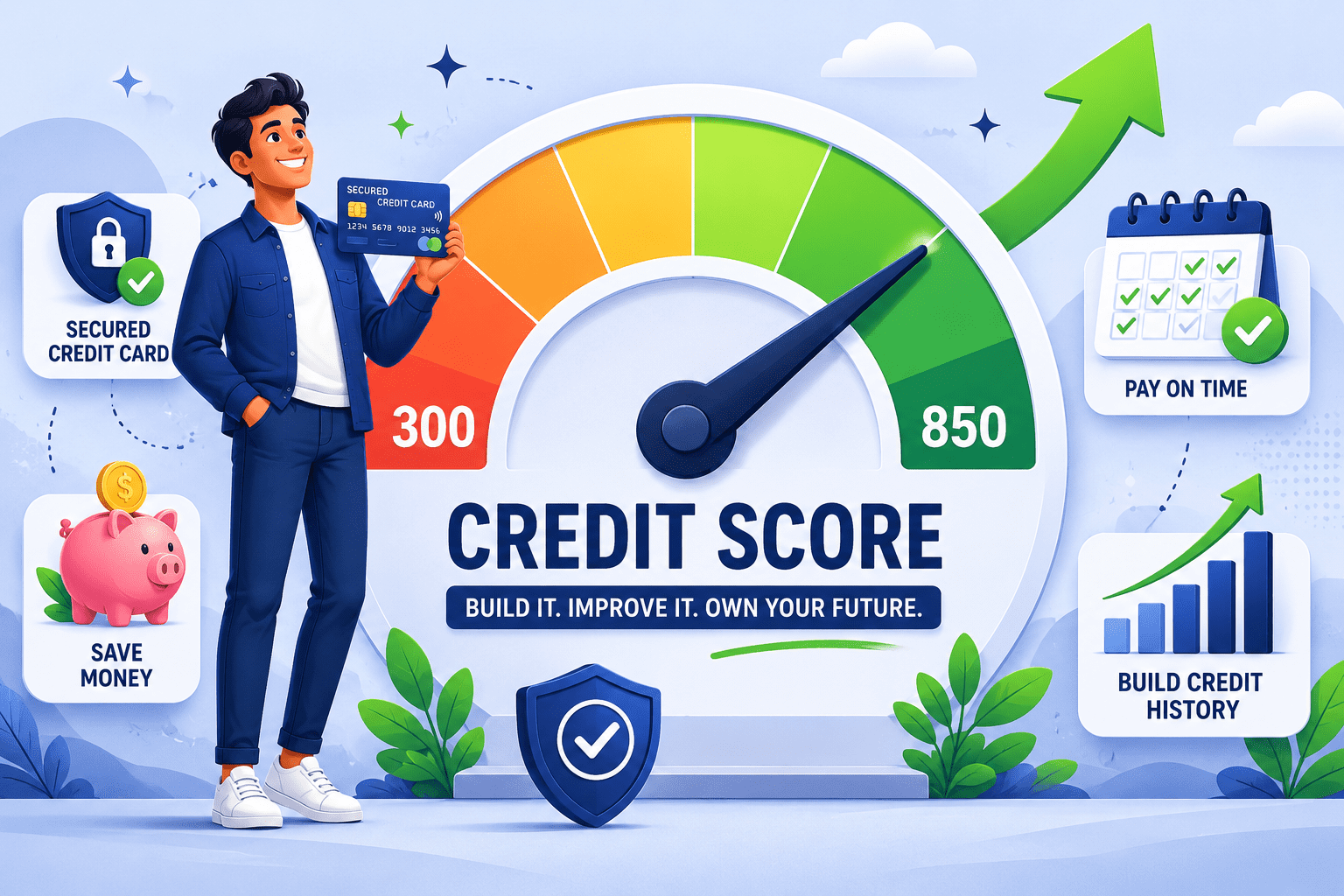
Your credit score is a three-digit number that tells lenders, landlords, and sometimes even employers how reliable you are with borrowed money. In the United States, the two main scoring systems are the FICO Score and VantageScore. Both range from 300 to 850. The higher your score, the better.
Here is what those ranges generally look like:
- 300 to 579 = Poor
- 580 to 669 = Fair
- 670 to 739 = Good
- 740 to 799 = Very Good
- 800 to 850 = Exceptional
In 2026, your credit score affects a lot more than just loans. It can determine whether your rental application gets approved, how much you pay for car insurance, whether you qualify for a new phone plan, and in some states, it can even come up during a job background check. Having no credit history, which some people call being “credit invisible,” puts you at a real disadvantage in all of these areas.
The good news? Building credit does not require you to go into debt or spend money you do not have.
The 5 Factors That Make Up Your Credit Score
Before you start building credit from scratch, it helps to understand what actually goes into your credit score. The FICO scoring model breaks it down like this:
- Payment History (35%) – Do you pay your bills on time? This is the single biggest factor.
- Credit Utilization (30%) – How much of your available credit are you using? Lower is better.
- Length of Credit History (15%) – How long have your accounts been open?
- Credit Mix (10%) – Do you have different types of credit, like a card and a loan?
- New Credit Inquiries (10%) – Have you recently applied for a lot of new credit?
When you are building credit from scratch, payment history and credit utilization are the two things you should focus on most. Get those right from the very beginning and your score will grow steadily.
Step 1: Check If You Already Have Any Credit History
Before you do anything else, go to AnnualCreditReport.com and pull your free credit reports from Equifax, Experian, and TransUnion. Many people assume they have no credit history when they actually have a little something on file from an old account, a utility, or a medical bill.
Checking your own credit report is a soft inquiry and will never hurt your score. It just gives you a clear picture of where you are starting from.
If your reports come back empty, do not stress. That is completely normal, and that is exactly what the rest of this guide addresses.
Step 2: Get a Secured Credit Card
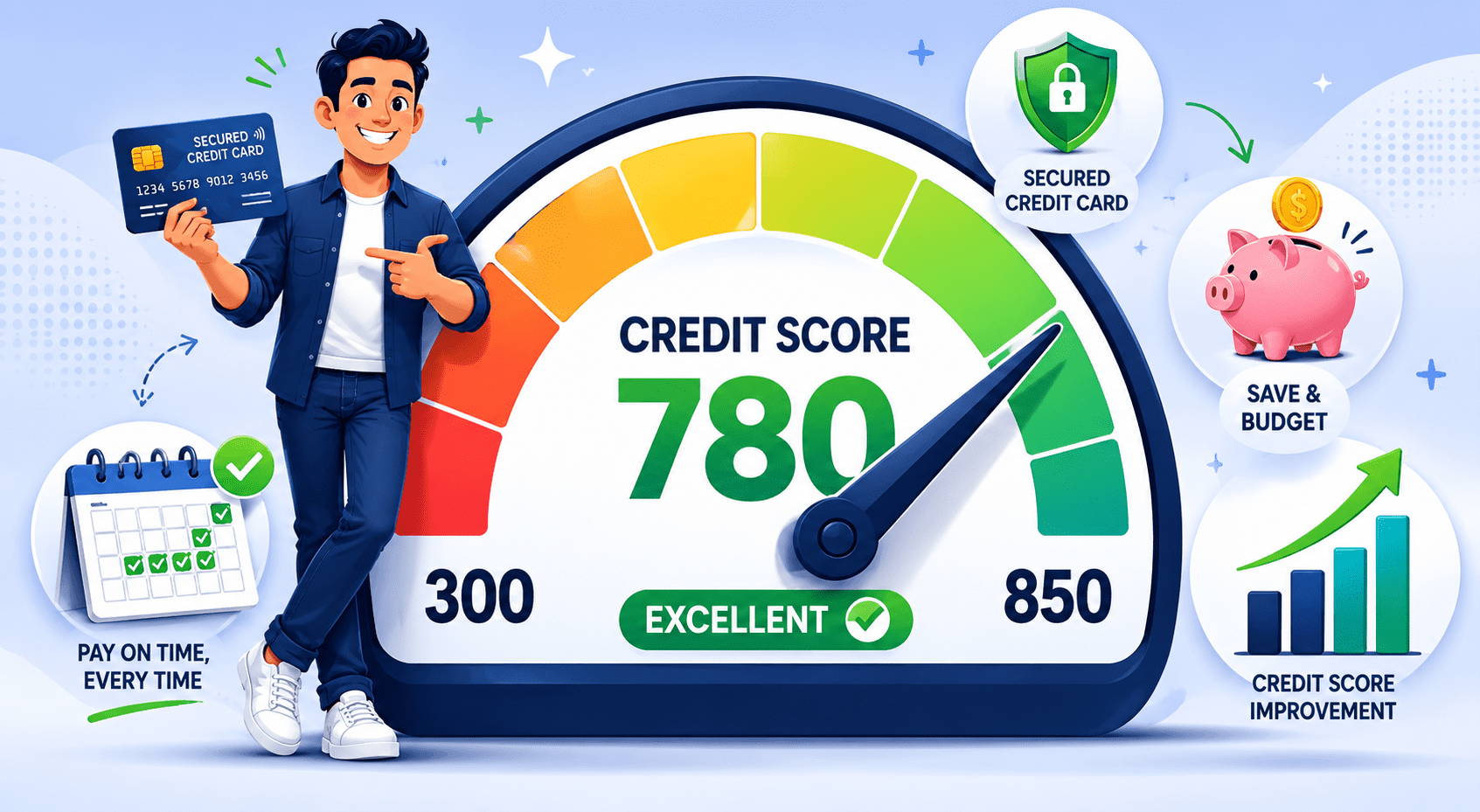
A secured credit card is the most reliable way to start building credit from scratch. Here is how it works: you put down a cash deposit, usually somewhere between $200 and $500, and that deposit becomes your credit limit. The card works like any regular credit card, and your payment activity gets reported to the three major credit bureaus every month.
The deposit protects the lender in case you do not pay. That is why secured cards are available to people with no credit history at all. No credit check required in many cases.
To build credit fast with a secured card, follow these rules:
- Use it for small, regular purchases like gas or groceries
- Keep your balance under 30% of your credit limit at all times (so under $150 on a $500 limit card)
- Pay the full balance in full every single month, before the due date
- Set up autopay so you never miss a payment
Many secured cards, like the Discover it Secured, the Capital One Quicksilver Secured, and the Chime Credit Builder, eventually graduate to unsecured cards and return your deposit after you show consistent on-time payments. That is a nice bonus on top of the credit you are building.
Step 3: Apply for a Credit Builder Loan
A credit builder loan is another powerful tool for people building credit from scratch. It works a little differently than a regular loan. Instead of giving you the money upfront, the lender holds it in a savings account. You make monthly payments over 12 to 24 months, and when the loan is paid off, you receive the money.
Every on-time payment gets reported to the credit bureaus, which builds your credit history steadily. Most credit builder loans are offered through credit unions and smaller community banks. They require no credit history to qualify.
Using a credit builder loan alongside a secured credit card is one of the best moves you can make early on because it gives you two types of accounts. FICO scores consider your credit mix, so having both a revolving account (the card) and an installment account (the loan) works in your favor.
Step 4: Become an Authorized User on Someone Else’s Card
If you have a parent, spouse, or trusted friend with a long credit history and good payment habits, ask them to add you as an authorized user on one of their credit cards. You do not even have to use the card. Just being listed as an authorized user means their positive payment history shows up on your credit report.
This is one of the fastest ways to get a credit score if you are starting from scratch. It works because the card’s entire history, including how long the account has been open and every on-time payment, gets added to your credit file.
One important note: make sure the card issuer actually reports authorized users to the credit bureaus. Most major issuers do, but it is worth confirming before you ask someone to do you this favor.
Step 5: Use Experian Boost and Rent Reporting Services
In 2026, tools like Experian Boost let you add your regular bill payments to your credit file. This includes utility bills, phone bills, streaming subscriptions, and now even rent payments in many cases. These are payments you are already making every month. Experian Boost just makes sure they count toward your credit score.
This does not work with all three bureaus, but since Experian is one of the big three, it can give your score a meaningful push, especially in the early stages when you do not have much else on file.
If you pay rent, some services like RentTrack and LevelCredit will also report your monthly rent payments to the credit bureaus. This can be a great way to build credit history even if you are not ready to open a credit card.
Step 6: Keep Your Credit Utilization Low
Once you have a secured card, your credit utilization becomes one of the most important numbers to manage. Credit utilization is the percentage of your available credit that you are currently using.
Experts consistently recommend keeping utilization below 30%. If your secured card has a $500 limit, that means keeping your balance under $150. For the best possible scores, keep it under 10%.
One thing many beginners get wrong: you do not need to carry a balance to build credit. Paying your full balance every month is actually better for your score and your wallet because you pay zero interest.
Step 7: Never Miss a Payment. Ever.
This one is non-negotiable. Payment history makes up 35% of your FICO score. One missed payment can follow you for up to seven years and can seriously damage a score you worked hard to build.
Set up autopay for at least the minimum payment on every account. Then go in manually and pay the full balance before the due date. This way you never miss a payment, but you also never pay interest.
How Long Does It Take to Build Credit from Scratch?
Here is a realistic timeline for building credit from scratch:
- Month 1 to 3: Open your accounts (secured card, credit builder loan, authorized user)
- Month 4 to 6: Your first credit score appears in the system. It might start in the 600s. That is normal.
- Month 6 to 12: With consistent on-time payments and low utilization, scores often climb into the 650 to 700 range
- Month 12 to 24: With continued good habits, reaching a 700+ score is very realistic
Building credit from scratch is a slow process by design. The credit system rewards patience and consistency, not shortcuts.
Common Mistakes to Avoid When Building Credit
A few things can slow your progress or hurt your score:
- Applying for too many cards at once. Every hard inquiry slightly lowers your score. Start with one or two accounts.
- Closing your first credit card. Older accounts help your score. Keep your first card open even if you do not use it much.
- Carrying high balances. High utilization hurts your score even if you always pay on time.
- Missing even one payment. The damage is real and lasts years.
Final Thoughts: Building Credit from Scratch Is Simpler Than You Think
Building credit from scratch in 2026 does not require luck, connections, or a big income. It requires one or two of the right accounts, consistent on-time payments, and the discipline to keep your balances low.
Start with a secured credit card. Add a credit builder loan if you can. Ask someone you trust to add you as an authorized user. Use Experian Boost to get credit for bills you are already paying. Then just let time do its work.
A year from now, you will have a real credit score, a track record lenders can see, and access to financial products you could not qualify for before. That is a serious upgrade, and it starts with one small step today.
Looking to track your finances better? Check out our free Take-Home Pay Calculator and Mortgage Calculator at Fiscible.